Success message
Error message

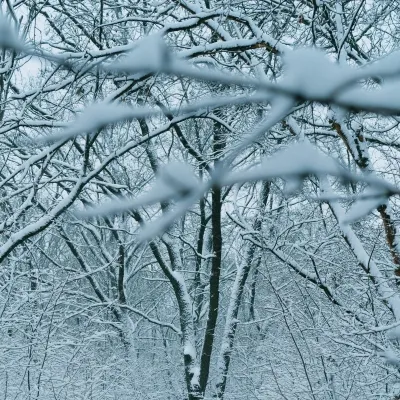
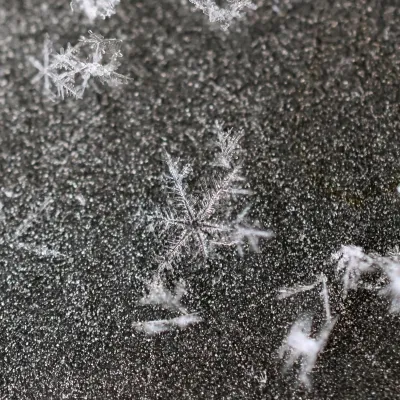
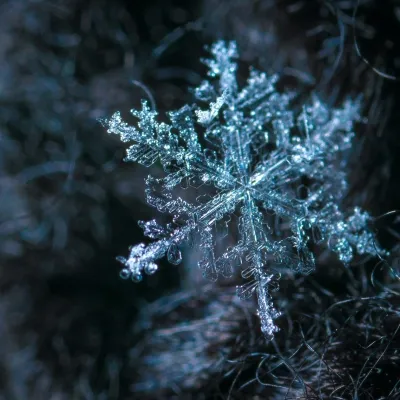
of fluffy snow typically fall from the sky during the winter, blessing Lake Tahoe’s resorts and merchants with visitors eager to experience all that Lake Tahoe has to offer in the winter.
As I blaze a trail snowshoeing through the woods, I start to wonder about the science of snow: how do snowflakes form, why are the flakes shaped the way they are and what causes the delightful crunching sound when it’s cold?
Contrary to what many seem to believe, I don’t know much about anything but I wonder about everything. Writing this column keeps my mind alive wondering and my brain fresh researching the answers to all my questions.
Here is what I learned: the science of snow basically comes down to chemistry and the properties of water.
A snowflake begins forming when a tiny dust or pollen particle comes into contact with water vapor high in the earth’s atmosphere.
The water vapor attaches to the particle and freezes into a tiny crystal of ice. This crystal is now heavier than the air so it begins to fall, gathering more water vapor on its journey.
The pattern of bonding forms the crystal into a six-sided figure, due to the water molecule’s composition of two hydrogen atoms and one oxygen atom through a process called hydrogen bonding.
As the water molecules are freezing and compacting, they continue to bond in this six-sided configuration. Right before completing the freezing process, the hydrogen bonds push the molecules to the farther possible distance from each other, causing a 4 degree expansion as the ice crystals set.
This expansion property is the reason why ice floats. Water, unlike most substances, is lighter in solid than liquid form due to this expansion, which is essential to life on Earth. The ice that forms and floats on bodies of water protects the aquatic plant and animal life beneath. Not only that, if ice were to sink, eventually the entire body of water would freeze.
And indeed, over the 4.5 billion years this planet has been in existence, if ice were to sink, the entire planet would have become a giant ice cube and we would not exist.
In this way, hydrogen bonding makes all life on Earth possible.
Snowflakes may incur changes on the way down from high up in the atmosphere. The snow may pass through a warm layer, melting it. A deep cold layer closer to the ground may refreeze it and it will fall as sleet or ice pellets.
In some conditions, snowflakes encounter super-cooled water droplets. When these super-cooled droplets attach to the snowflake, they freeze. If the crystal collects enough of these droplets, it loses its defined shape and falls as a fragile, oblong shape called graupel.
Once on the ground, even if it falls as light and fluffy snow, the flakes will eventually begin the process of thawing under the sun, then refreezing at night, compacting more throughout the days until it becomes snowpack.
If, for some reason, this snowpack were to remain on the ground year-round, as it does in the Polar Regions, it eventually would develop into a mass of ice called a glacier.
For those of us who have had to move it around, shovel it off our decks, drive over it, slip on it and stomp through it, it seems that we have had mounds of snow this season already.
Indeed, depending on where you measure it, the Lake Tahoe area typically gets between 25 and 40 feet of snow on the higher elevations.
One of my favorite things about snow, besides snowshoeing through it, is the crunching sound it makes when it’s 10 or 15 degrees or less, as it often is in Minnesota, where I grew up. This is due to the lack of moisture in the snow at low temperatures. The best crunch comes a few hours after the snowfall, when the individual crystals have bonded more snugly together. The crunching sound comes from breaking those bonds as we walk across it.
I’m outside walking every day. When it’s cold, I bundle in many layers, and revel in the crunch.
Toree Warfield is an avid nature lover, and writes this column to teach and stimulate interest in the marvels that surround us.
Sources:
http://geology.com/articles/snowflakes/
http://www.noaa.gov/features/02_monitoring/snowflakes.html
https://en.wikipedia.org/wiki/Crystallization
https://en.wikipedia.org/wiki/Snow
https://en.wikipedia.org/wiki/Firn
https://en.wikipedia.org/wiki/Ice_crystals
http://www.doublexscience.org/why-are-snowflakes-always-six-sided/*******
https://en.wikipedia.org/wiki/Hydrogen_bond
https://en.wikipedia.org/wiki/Atom
https://en.wikipedia.org/wiki/Water
http://geology.com/articles/water-mineral/
https://en.wikipedia.org/wiki/Graupel
https://en.wikipedia.org/wiki/Ice_pellets
http://www.thestormking.com/Weather/Sierra_Snowfall/sierra_snowfall.html
http://www.onthesnow.com/california/heavenly-mountain-resort/historical-snowfall.html
http://snowforecast.com/component/content/article/4346-heavenly-mountain-resort
http://squawalpine.com/skiing-riding/weather-conditions-webcams/squaw-valley-snowfall-tracker
http://tahoe.uslakes.info/Level.asp*****
http://www.scientificamerican.com/article/why-does-snow-squeak-when-stepped-on/
http://blog.sciencegeekgirl.com/2008/12/29/why-does-snow-crunch-under-your-feet/
Research notes:
A hydrogen bond is the electrostatic attraction between polar groups that occurs when a hydrogen (H)atom bound to a highly electronegative atom such as nitrogen (N), oxygen (O) or fluorine (F)experiences attraction to some other nearby highly electronegative atom.
These hydrogen-bond attractions can occur between molecules (intermolecular)or within different parts of a single molecule (intramolecular).[2]Depending on geometry and environmental conditions, the hydrogen bond may be worth between 5 and 30 kJ/mole in thermodynamic terms. This makes it stronger than a van der Waals interaction, but weaker than covalentor ionic bonds. This type of bond can occur in inorganic molecules such as water and in organic molecules like DNA and proteins.
Ultimately, it is the temperature at which a crystal forms — and to a lesser extent the humidity of the air — that determines the basic shape of the ice crystal. Thus, we see long needle-like crystals at 23 degrees F and very flat plate-like crystals at 5 degrees F. The intricate shape of a single arm of the snowflake is determined by the atmospheric conditions experienced by entire ice crystal as it falls. A crystal might begin to grow arms in one manner, and then minutes or even seconds later, slight changes in the surrounding temperature or humidity causes the crystal to grow in another way. Although the six-sided shape is always maintained, the ice crystal (and its six arms) may branch off in new directions. Because each arm experiences the same atmospheric conditions, the arms look identical.
Once the snow is on the ground, it will settle under its own weight (largely due to differential evaporation) until its density is approximately 30% of water. Increases in density above this initial compression occur primarily by melting and refreezing, caused by temperatures above freezing or by direct solar radiation. In colder climates, snow lies on the ground all winter. By late spring, snow densities typically reach a maximum of 50% of water.[39] When the snow does not all melt in the summer it evolves into firn, where individual granules become more spherical in nature, [40] evolving into a glacier as the ice flows downhill.[41]
Ice clouds are composed of ice crystals, the most not able being cirrus clouds and ice fog. The slight whitening of a clear blue sky caused by ice crystals high in the troposphere can be a sign that a weather front (and rain) is approaching, as moist air is carried to high levels and freezes to ice crystals.
hydrogen bonding. Thanks to the intermolecular force of hydrogen bonding, all snowflakes have six sides, and hydrogen bonding also makes life as we know it possible. Now that’s an important bond.
The number of protons in the nucleus defines to what chemical element the atom belongs: for example, all copper atoms contain 29 protons. The number of neutrons defines the isotope of the element. [3]The number of electrons influences the magnetic properties of an atom. Atoms can attach to one or more other atoms by chemical bonds to form chemical compounds such as molecules. The ability of atoms to associate and dissociate is responsible for most of the physical changes observed in nature, and is the subject of the discipline of chemistry.