Success message
Error message

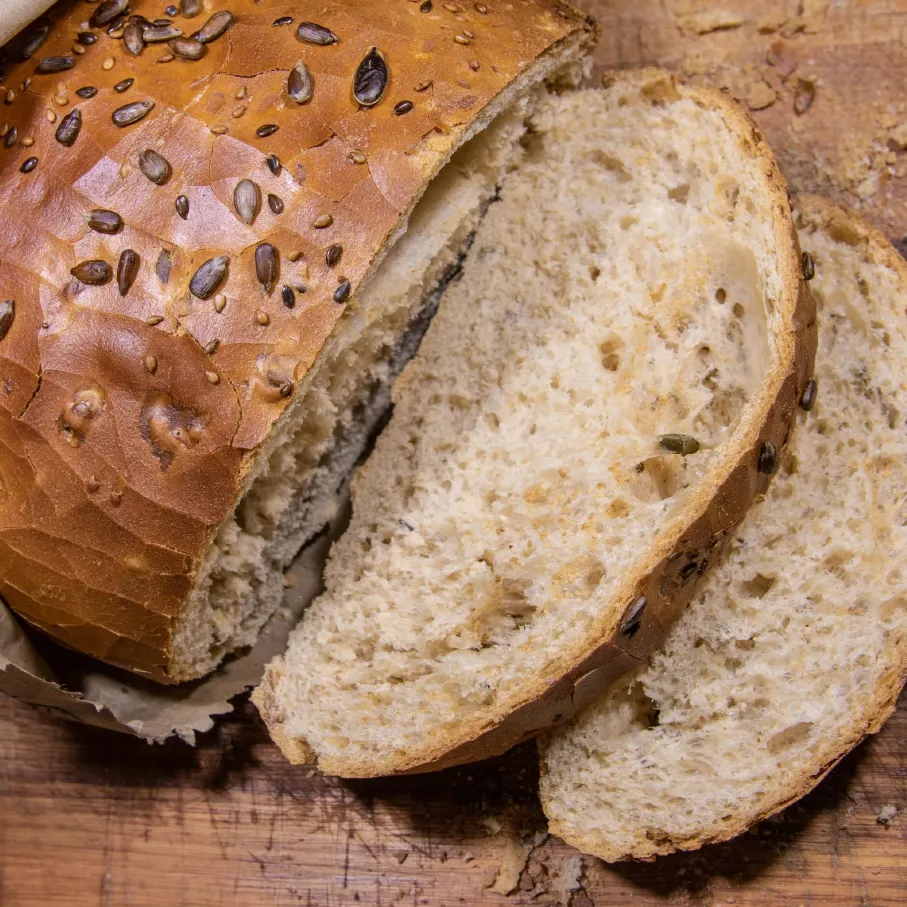
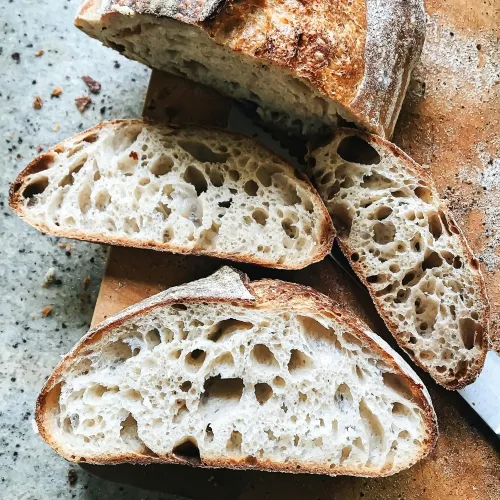
a bread machine about twelve years ago. It sat on a shelf in the garage for a few years, until I finally opened the box, threw in the boxed bread mix it came with, added the liquid ingredients and turned it on. Even though it was just a mix, the ingredients of which were at least five years old, I was addicted at the first bite.
Since then, I have evolved my bread-making technique and have customized some recipes. I didn’t plan on getting into sourdough, as I felt that developing and maintaining the start would be too much trouble, when someone gave me some Amish Friendship Bread start, along with an elaborate list of directions.
I normally won’t take time for this sort of thing but something about this process intrigued me so I went along with it. Day One – squeeze the bag to blend the ingredients. Day Two, do it again.
On Day Five, it gets interesting – add ingredients to the bag, blending by squeezing. On Day Ten, make the bread, which is really more of a cake. Then, pass along a baggie of start to someone else. And so it goes.
It was so much fun and so delicious, it took me awhile to realize I had made my first sourdough bread and I wanted more. Before too long, I was babysitting three different sourdough starts, in addition to the Amish Friendship Bread.
Sourdough bread has been around for centuries, possibly dating back to 3700 BC. In more modern times, French bakers introduced sourdough techniques in San Francisco during the Gold Rush. From there, the sourdough tradition made its way to Alaska. During the Klondike Gold Rush, miners would keep a pouch of sourdough around their necks, and in their sleeping bags at night to keep it from freezing, when actually, heat can kill the sourdough, while freezing does not. But they weren’t taking any chances as food sources were scarce.
The difference between sourdough and regular bread is lactic acid bacteria. Bacteria and yeast spores are naturally present in flour. Adding water or some other liquid to the flour causes the enzymes present in flour to begin breaking down the starch into sugars which the yeast can metabolize.
Over time, given the proper temperature and refreshment, the mixture ferments into a balanced, stable culture. The start is born and can be kept alive indefinitely, if treated properly.
There are many starts which can be purchased but I decided to create my own. I would call it an experiment, observing how the mixture changed in composition and consistency over time. I made starts using wheat flour, white flour and potato flakes.
As a beginner, I discovered a simple start that takes only 24 hours to cure, and the entire start gets used in the recipe, so there is no continuing commitment. This start is created using half of a 12-oz bottle of beer.
Pour half a beer (3/4 cup) into a 32-oz jar. Add one teaspoon of packaged yeast, four teaspoons of packed brown sugar, one cup of flour and stir. Cover and let stand at room temperature for 24 hours or so, stirring two or three times.
When ready, pour the start into the bread pan, add 1/3 cup milk, one egg, 4 teaspoons olive oil, 2 cups bread flour, 3/4 teaspoon salt, and one teaspoon of active dry yeast. I also add a teaspoon of ground flax seed, perhaps a sprinkling of raw sunflower seeds and/or raw chopped cashews.
Press start on the bread machine, using the basic white setting, and about three hours later you’ll smell the aroma of baking bread.
An important step is to check the consistency of the dough when the machine begins the kneading cycle. At this point, I will either add a drizzle of water or a bit of flour until it reaches the proper consistency. And this is just a matter of experience so you'll have to play with it.
There is so much more to sourdough and I am only just beginning to experiment. I still have not found the formula for the signature “sourness” that people expect from sourdough but part of the fun is the journey and I’m determined to unlock the secret.
I must warn you that diving into sourdough is addictive, also that I have added 10 pounds to my small frame since I began my odyssey into bread making. This obsession comes with a price.
Toree Warfield is an avid nature lover, and writes this column to teach and stimulate interest in the marvels that surround us.
http://science.howstuffworks.com/innovation/edible-innovations/sourdough.htm
https://afeastforthesenses.wordpress.com/2011/09/19/the-science-of-sourdough/
http://en.wikipedia.org/wiki/Sourdough
https://afeastforthesenses.wordpress.com/tag/sourdough/
“Simple Sourdough”, Mark Shepard
“Baking with Sourdough”, Sara Pitzer
Better Homes and Gardens “Biggest Book of Bread MachineRecipes”
“Giant Book of Bread Machine Recipes”, Norman A. Garrett
http://www.ehow.com/about_6572654_lactic-acid-fermentation-create_.html
http://www.thefreshloaf.com/node/10375/lactic-acid-fermentation-sourdough
http://hamelmanchallenge.blogspot.com/2010/06/tech-note-high-extraction-flour.html
http://www.foodcomp.dk/v7/fcdb_details.asp?FoodId=1292
miscellaneous tidbits that didn't make it into the article:
…… a start from rye flour which apparently is the beststarter medium because it is a high-extraction flour, which provides more vitamins and minerals.
Extraction rate refers to how much is left after milling.For example, whole wheat flour has a 100% extraction rate, as the entire wheat kernel is milled into the flour. Typical white flour has the outer hull, or bran and the germ, or embryo, removed, leaving only the endosperm, which is the portion of the kernel that is the food for the developing plant.
Whole wheat flour, as anyone knows who has attempted to bakebread using only that, does not contain enough gluten and will bake into a solid ball, hardly rising at all.
Rye flour, on the other hand, has an 85% extraction rate –just right. White flour, or bread flour, has an approximately 70% extraction rate.