Success message
Error message
the recycling bug long, long ago when I was in college as I cleaned up after one of our numerous parties. I decided I could no longer throw away all this aluminum so I began saving it.
A couple of months and several garbage bags full of smashed beer cans later, I was ready to reap the rewards of my efforts so I hauled my loot to the recycling center, from which I drove away with around $8. Even back then, that was about enough for lunch.
Though it was not worth it financially, it had become worth it to me as an environmental responsibility and I have been a recycling maven ever since.
Recycling has changed so much since then; in fact, how we go about recycling around the lake has changed a lot even in the last few years. Consequently, there are misconceptions about what goes in the blue bag destined for recycling, what does not, the condition it should be in when it goes in, and so on.
In doing the research for this article, I discovered several mistakes I was making, I know others are also, so together we are going to learn how to be A+ recycling students.
An important thing you want to do is make sure all containers are basically free of food particles. Food is a contaminant, no matter what the container. Rinse or scrape or take heed of this handy tip: a dog “rinses” containers extremely well, without using any water.
Food, in addition to contaminating a recycling load, attracts wildlife to the recyclables left out for pick up.
I recently inherited a bag of recyclables after a party which contained a large amount of food waste. Instinctively I knew it was not recyclable in that condition so I dumped it out and hosed it off. Then I decided to find out once and for all what can and cannot be recycled.
I also wanted to find out what happens to the recyclables that are harvested around the lake so I consulted with Madonna Dunbar, Resource Conservationist, IVGID Waste Not Program (now retired), as well as Jennifer Quintana, Operations Specialist at Waste Management at the sorting facility in Sacramento.
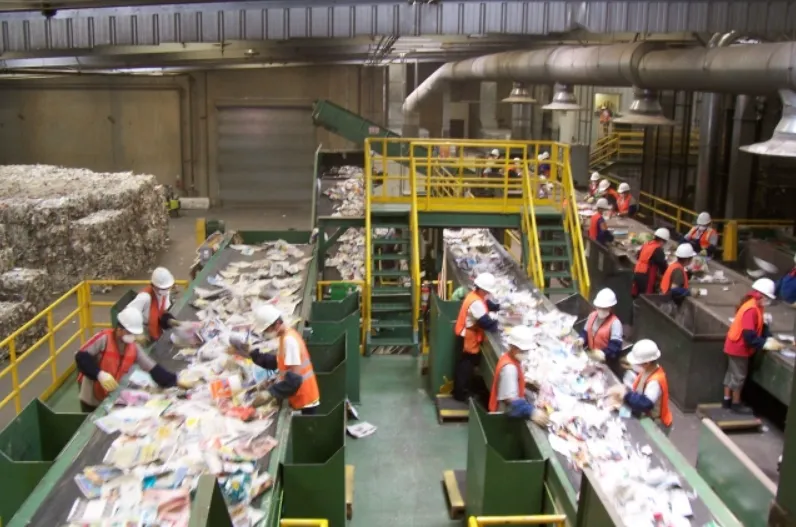
South Lake Tahoe has a dirty materials recovery facility (MRF). Dirty recovery means that all trash is sorted at the facility and recyclables are recovered from the trash stream; generally about two-thirds of recyclables are recovered using this system. If your community does not have a dirty MRF, then whatever gets picked up as trash goes directly to the landfill, as is the case in Incline Village.
The three waste collection service providers operating in the Lake Tahoe Basin are all offering a single-stream recycling program in an effort to capture more of the recyclables. The more people who can be encouraged to participate in this effort, the more we can lessen the amount of trash deposited in landfills.
For those participating in the recycling program, place your items in the recycle bin, and set these out per your community’s schedule.
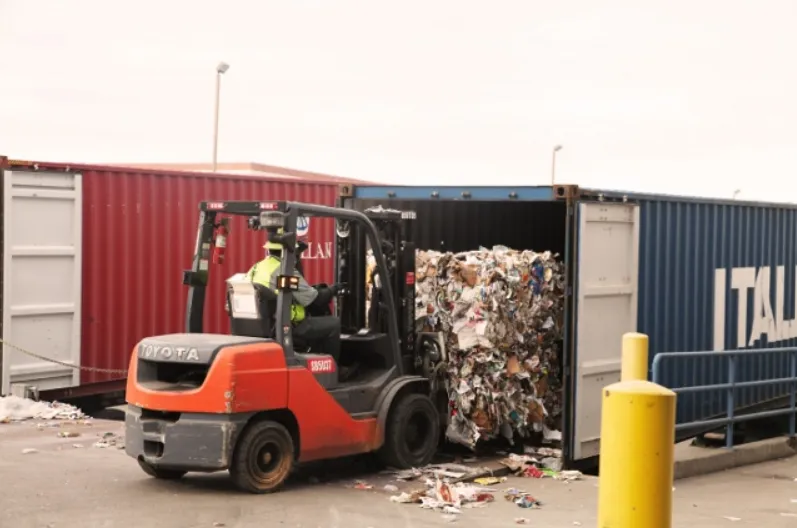
The contents retrieved in Incline Village are taken to the Sacramento Recycling and Transfer Station run by Waste Management.
The best way to understand what happens there is to view the Waste Management video, a tour of a similar separating facility in Philadelphia: https://www.youtube.com/watch?v=_GP3JuiX5BY.
If anyone is interested in taking a tour of the facility in Sacramento, please contact me at toree.saveourplanetearth@gmail.com. In fact, if enough people are interested, perhaps we can put together a Lake Tahoe group and make it an event.
So after this short discussion about the process, where the recyclables go, how materials are extracted and what purpose they serve, I’m hoping we are all more excited about and committed to recycling. We can make an effort to be pioneers, and aim for a nearly perfect recycling score.
If there are any items not on the list that you’d like to know about, please let me know and we will figure it out.
Here is a chart of some common materials on the do and don’t list:
Plastic bottles
Glass bottles and jars
Plastic containers such as yogurt, cottage cheese, sour cream
Cardboard
Paper, newspaper, wrapping paper (no foil wrap)
Magazines
Phone books
Cereal boxes (remove the liner)
Pizza boxes, cut out food residue
Boxes frozen foods come in
Paper cardboard milk and juice cartons
Soft drink cups
Paper coffee cups
Aluminum cans
Aluminum foil (wipe off food residue)
Aluminum baking pans (clear of food)
Tin and steel cans
Ceramics, coffee mugs, plates
Items soiled with food
Mirror or window glass
Pyrex or cookware
Metal or plastic caps and lids
Crystal
Lightbulbs*
Styrofoam*
Batteries*
Electronics*
* There are other options for disposal and/or recycling of these items—but they do not belong in the single-stream recycling system
On plastics, look for the recycling symbol with the number 1-7 inside. If you can’t find this symbol, into the trash it goes, which includes all the plastic utensils I looked at.
Toree Warfield is an avid nature lover, and writes this column to teach and stimulate interest in the marvels that surround us.
Links:
https://www.youtube.com/watch?v=_GP3JuiX5BY(tour of single stream facility in PA)
http://www.wm.com/thinkgreen/what-can-i-recycle.jsp (What Can I Recycle?), Waste Management
Sources:
http://www.earth911.com/living-well-being/style/how-to-recycle-your-unwearable-tennis-shoes/
http://www.bing.com/search?q=recycle+america+reno+nv&form=AARTDF&pc=MAAR&src=IE-SearchBox
http://www.bing.com/search?q=tiger+lines+trucking&form=AARTDF&pc=MAAR&src=IE-SearchBox
http://www.recycleamerica.com/
http://www.wm.com/location/california/sacramento-valley/sacramento-recycling.jsp
http://www.recycledrunners.com/drop-off-locations-map/
https://www.youtube.com/watch?v=meNvuR96kmU
https://www.youtube.com/watch?v=_GP3JuiX5BY ***
http://reno.wm.com/about-program/
http://www.recyclecartons.com/center-info/?center=204&city=SACRAMENTO&county=SACRAMENTO&form=true
http://www.epspackaging.org/index.php?option=com_content&view=article&id=2&Itemid=2
(Walmart video recycling Styrofoam)
http://www.wm.com/thinkgreen/what-can-i-recycle.jsp