Success message
Error message

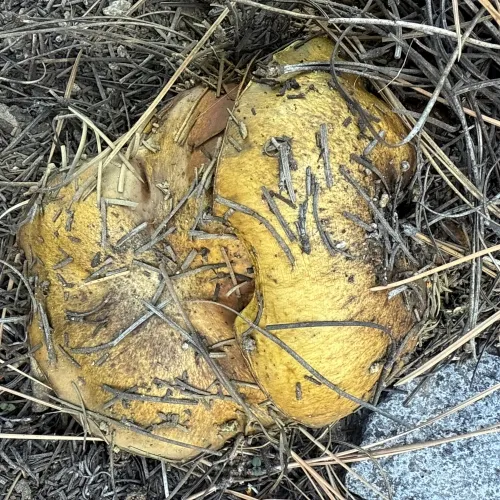
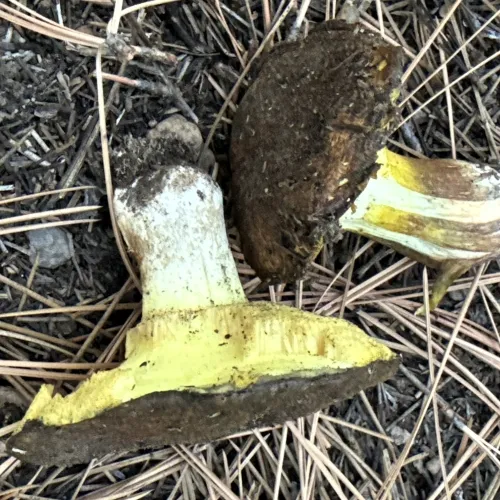
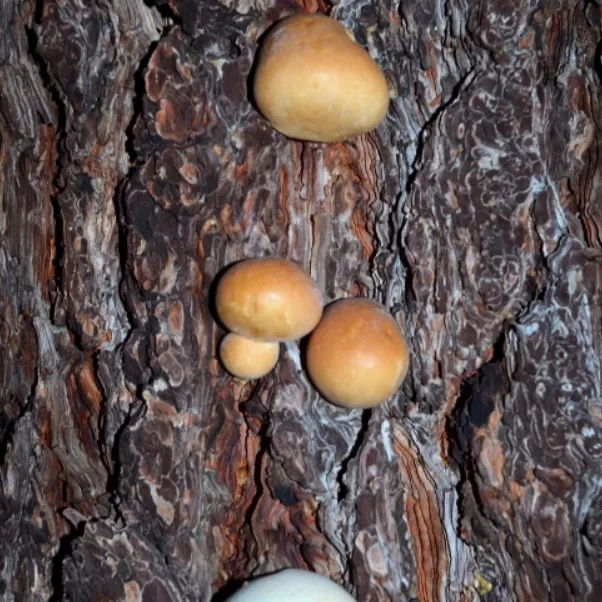
after a good rainstorm is one of my favorite things. Not only do the trees, the ground, the foliage and the air look and smell fresh, often interesting things have begun to grow. For example, mushrooms have sprung up seemingly overnight.
Actually, the real work of mushroom creation takes place underground, unseen, making it seem like it has magically appeared overnight.
The mushroom is the fruit of a fungus that has become colonized in the ground, within tree bark, on fallen logs – just about anywhere that is porous enough to allow the fungus to grow.
The fungus can create an enormous colony underground or within a solid organic object. This colony is known as mycelium. The mycelium is the vegetative part of the fungus and consists of a mass of branching, thread-like hyphae.
Through the mycelium, the fungus absorbs nutrients from its environment in a two-stage process. First, the hyphae secrete enzymes into the food source, breaking the biomolecules into smaller units which are then absorbed into the mycelium.
Chemically, the way mycelium lives and reproduces is opposite of plants using photosynthesis. Mushrooms take in carbon and consume oxygen, while plants consume carbon dioxide, creating carbon and oxygen.
The fungal life cycle has the beneficial effect of decomposing plant material. These fungi are an important part of the decomposition process and make it possible for this and other natural biological systems to function.
Now that the mycelium is established, the mushroom can form on the surface when the ground receives moisture. The mushroom initially forms a minute fruiting body, known as the pin stage. Once it grows to button stage, it can draw water from the mycelium and rapidly expand by inflating preformed cells that took several days to form in the primordia, which is the earliest recognizable stage of development.
The fruiting bodies are short-lived and will dry up quickly in the heat of the day but the mycelium can be massive and hundreds or thousands of years old.
The cap of the mushroom connects to the stem by a series of radiating gills, which also contain spores, a method by which the colony can reproduce. One mushroom contains a billion or more spores that, when released, can be carried on the wind or by birds or insects to other areas of the forest to begin a new colony.
Mushrooms are generally found in the produce section at grocery stores with the vegetables, when actually they are a fruit — the fruit of a fungus. Vegetables require sunlight for growth, as do fruits, but not the mushroom. The mushroom grows in the shade.
Mushroom farmers plant spores in the soil, a process called “inoculation”, which take about two weeks to colonize and reach the surface. The mushrooms are grown in flats, layers high and have to be hand-picked and trimmed.
Mushrooms are about 92% water but also contain useful nutrients. For example, one portabella mushroom has more potassium than a banana. Mushrooms are an excellent source of B vitamins, such as riboflavin and niacin; they also offer the essential minerals selenium and copper. To add to their culinary achievement, they are low in fat, carbohydrates and calories with zero sodium.
Mushroom farmers don’t need to have all the fun — you can grow your own mushrooms in your basement, perhaps by utilizing one of a variety of mushroom growing kits.
Don’t expect mushrooms overnight – it will take time to set up your growing operation and prepare to wait weeks or months before the growing substrate is completely colonized. This is a project for someone who really likes to grow things and/or who really loves mushrooms.
Though mushrooms won’t grow in direct sunlight, the substrate in which they grow will require some ambient light to “pin”, as it is called. Pinning is the initial dot that appears on the soil. Once the growing medium is fully colonized, and the initial growth appears as a pin, then as a “button”, the mushroom will double in size every 24 hours. At last you will reap the reward of your efforts.
Fungi Fun Facts
The study of fungi is called mycology
Fungi recycle plants after they die and transform them into rich soil – if not for fungi, the Earth would be buried in several feet of debris and life on the planet would soon disappear
Some of the oldest living mushroom colonies are fairy rings growing around the famous Stonehenge ruins in England
Create your own dyes by boiling wild mushrooms
The spores of mushrooms are made of chitin, a long-chain polymer that acts like a natural plastic
Under the right conditions, some mushrooms' spores can sit dormant for decades or even a century, and still grow
Learn more about growing your own mushrooms at North American Mycological Association.
Toree Warfield is an avid nature lover, and writes this column to teach and stimulate interest in the marvels that surround us.
http://www.cnps.org/cnps/grownative/tips/manzanita.php
http://plantid.net/Plants/Manzanita.htm
http://www.huffingtonpost.com/2014/02/25/the-truth-about-how-mushr_n_4849290.html
http://www.mushroomcompany.com/farmsonline/
http://nutritiondata.self.com/facts/vegetables-and-vegetable-products/2482/
http://www.ehow.com/info_7753661_mushrooms-grow-beneath-pine-trees.html
http://www.sporetradingpost.com/help_identify.htm
http://homeguides.sfgate.com/mushrooms-grow-tree-bark-28272.html
http://www.powerofmushrooms.com.au/did-you-know/mushroom-varieties/wild-mushrooms/
https://en.wikipedia.org/wiki/Mushroom
https://www.erowid.org/plants/mushrooms/mushrooms_mmgg.shtml
http://www.motherearthnews.com/organic-gardening/grow-your-own-mushrooms-zmaz04onzsel.aspx
http://www.scientificamerican.com/article/strange-but-true-largest-organism-is-fungus/
http://www.thenakedscientists.com/forum/index.php?topic=40114.0
http://www.fungi.com/blog/items/plug-spawn.html
https://en.wikipedia.org/wiki/Mycelium
https://en.wikipedia.org/wiki/Biopolymer
https://en.wikipedia.org/wiki/Biopolymer
https://en.wikipedia.org/wiki/Primordium
http://www.fungi.com/about-paul-stamets.html
http://www.fungi.com/blog/items/facts-about-mushrooms.html
http://www.livescience.com/49844-limpet-teeth-strongest-natural-material.html
http://articles.latimes.com/2004/jul/20/news/os-field20
http://eol.org/pages/155954/overview
http://eol.org/pages/155954/details
Bonus read, from Fungi Perfecti:
About PaulStamets Fungi Perfecti founder and president Paul Stamets has been a dedicated mycologist for over 40 years. Over this time, he has discovered and coauthored several new species of mushrooms, and pioneered countless techniques in the field of mushroom cultivation. He received the 1998 "Bioneers Award" from The Collective Heritage Institute, and the 1999 "Founder of a New Northwest Award" from the Pacific Rim Association of Resource Conservation and Development Councils. In 2008, Paul received the National Geographic Adventure Magazine's Green-Novator and the Argosy Foundation's E-chievement Awards. He was also named one of Utne Reader's "50 Visionaries Who Are Changing Your World" in their November–December 2008 issue. In February 2010, Paul received the President's Award from the Society for Ecological Restoration: Northwest Chapter, in recognition of his contributions to Habitat Restoration. In January of 2014, Paul received the highly acclaimed NAMA (North American Mycological Association) award for expanding the field of mycology for both amateurs and professionals. In 2014, Paul was chosen to be an "Invention Ambassador" by the American Association for the Advancement of Science (AAAS), the largest and most prestigious scientific organization in the world. He has written six books on mushroom cultivation, use and identification; his books Growing Gourmet and Medicinal Mushrooms and The Mushroom Cultivator (coauthor) have long been hailed as the definitive texts of mushroom cultivation. Other works by Paul Stamets include Psilocybe Mushrooms and Their Allies (out of print), Psilocybin Mushrooms of the World,MycoMedicinals®: an Informational Treatise on Mushrooms, and many articles and scholarly papers. His newest book is Mycelium Running: How Mushrooms Can Help Save The World. Paul sees the ancient Old Growth forests of the Pacific Northwest as a resource of incalculable value, especially in terms of its fungal genome. A dedicated hiker and explorer, his passion is to preserve, protect, and clone as many ancestral strains of mushrooms as possible from this pristine woodlands. Much of the financial resources generated from sales of goods from Fungi Perfecti are returned to sponsor such research. "The time to act is now. Waiting for science and society to wake up to the importance of these ancient Old Growth fungi is perilously slow and narrow in vision. The meager attempts thus far may be too little, too late. Unless we collectively pool our resources, the mushroom genome will become increasingly threatened, and therefore, our very existence may be at stake. The loss of these keystone organisms should be an ecological call-to-arms for all concerned about our children's future and the future of this planet. "The rainforests of the Pacific Northwest may harbor mushroom species with profound medicinal properties. At the current rates of extinctions, this last refuge of the mushroom genome should be at the top of the list of priorities for mycologists, environmentalists and government. If I can help advance this knowledge, I will have done my part to protect life on this planet. And yet, if it were not for our customer's contributions, with our limited finances, this goal could not be achieved."
See more at: https://fungi.com/pages/about-us#sthash.4plYeQ4q.dpuf