Success message
Error message

the outdoors, the best advice I have is to lookup, look down, look all around, and listen to the sounds of nature but today we’re going to look down and discover some perhaps lesser known wildflowers that are found in the Lake Tahoe area.
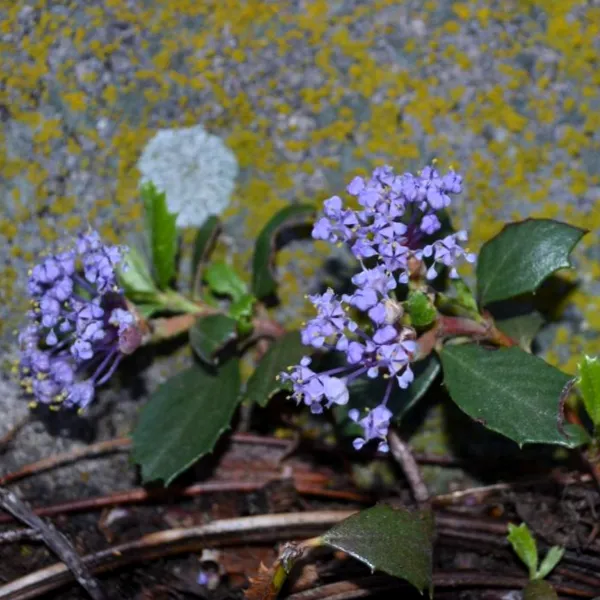
Most of you have probably seen mahala mat, but did not know what it was. I called it forest ivy for years until I decided I had to know the real name and discovered that it is actually an evergreen shrub of the buckthorn family. It is a low-growing ground cover, with spiny leaves that produces tiny lavender flowers in early spring and bears a wrinkled, reddish fruit. It grows in partial sun and flourishes in cooler temperatures. You probably have some growing in your yard, clustered around the base of your pine trees.
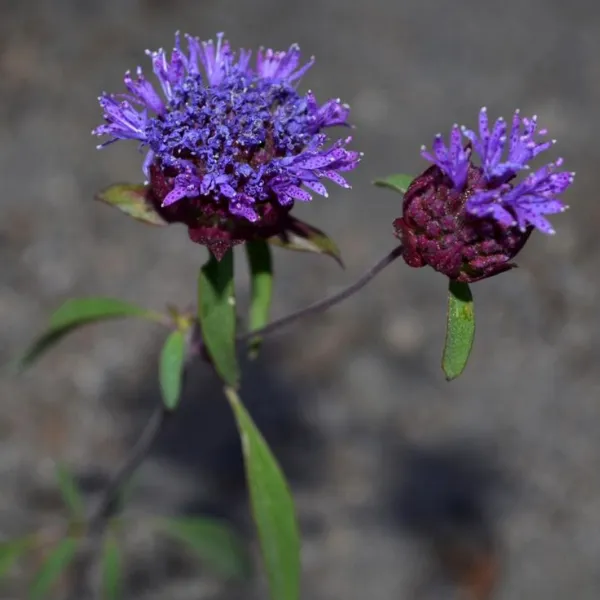
Brewer's monardella is a hairy aromatic annual plant of the mint family. It supports birds, including hummingbirds, bees, butterflies and caterpillars. I sometimes harvest its seeds and afterwards my fingers smell most definitely minty. The seeds are easy to collect—simply wait until the flower head has dried completely, break off the head and crush it between your fingers over a container or envelope. I sprinkled the seeds in the fall and had a nice crop of these pretty purple flowers for the spring. They grew again the next year, although less abundantly, and none since. Time to harvest some more seeds!
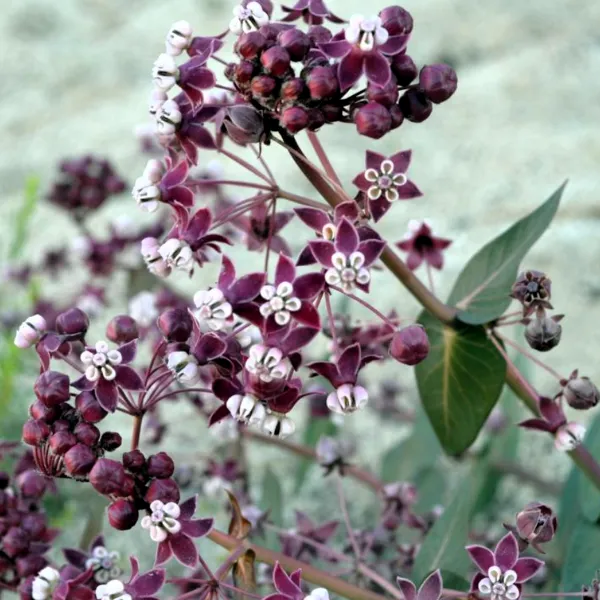
Purple milkweed, or heart-leaf milkweed, is a perennial native to the Western United States. I have only seen one purple milkweed plant but it emerges every year, on the side of a course sandy slope. It took me years of admiring its unusual flowers before I was able to identify it, which is silly because I grew up with common milkweed, which was all over Minnesota where I spent my childhood. Its fruit are small pods, which burst open to reveal many flat seeds attached to silky hairs, enabling the seeds to blow off with the wind.
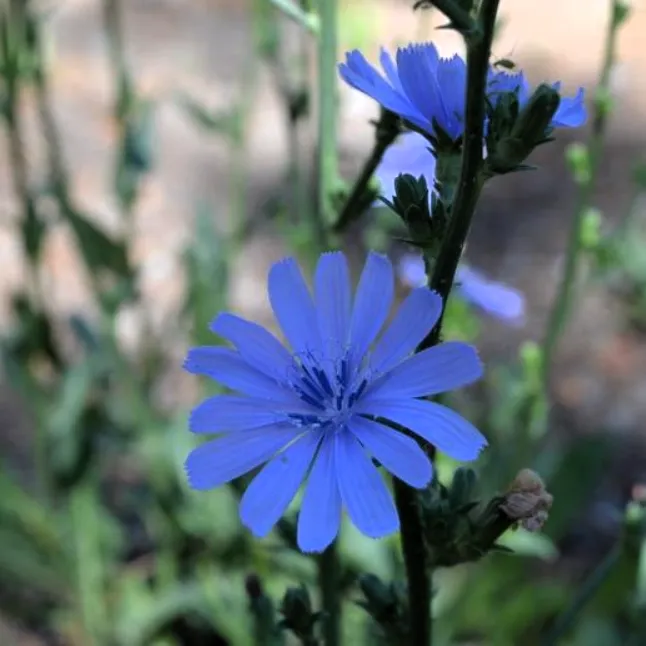
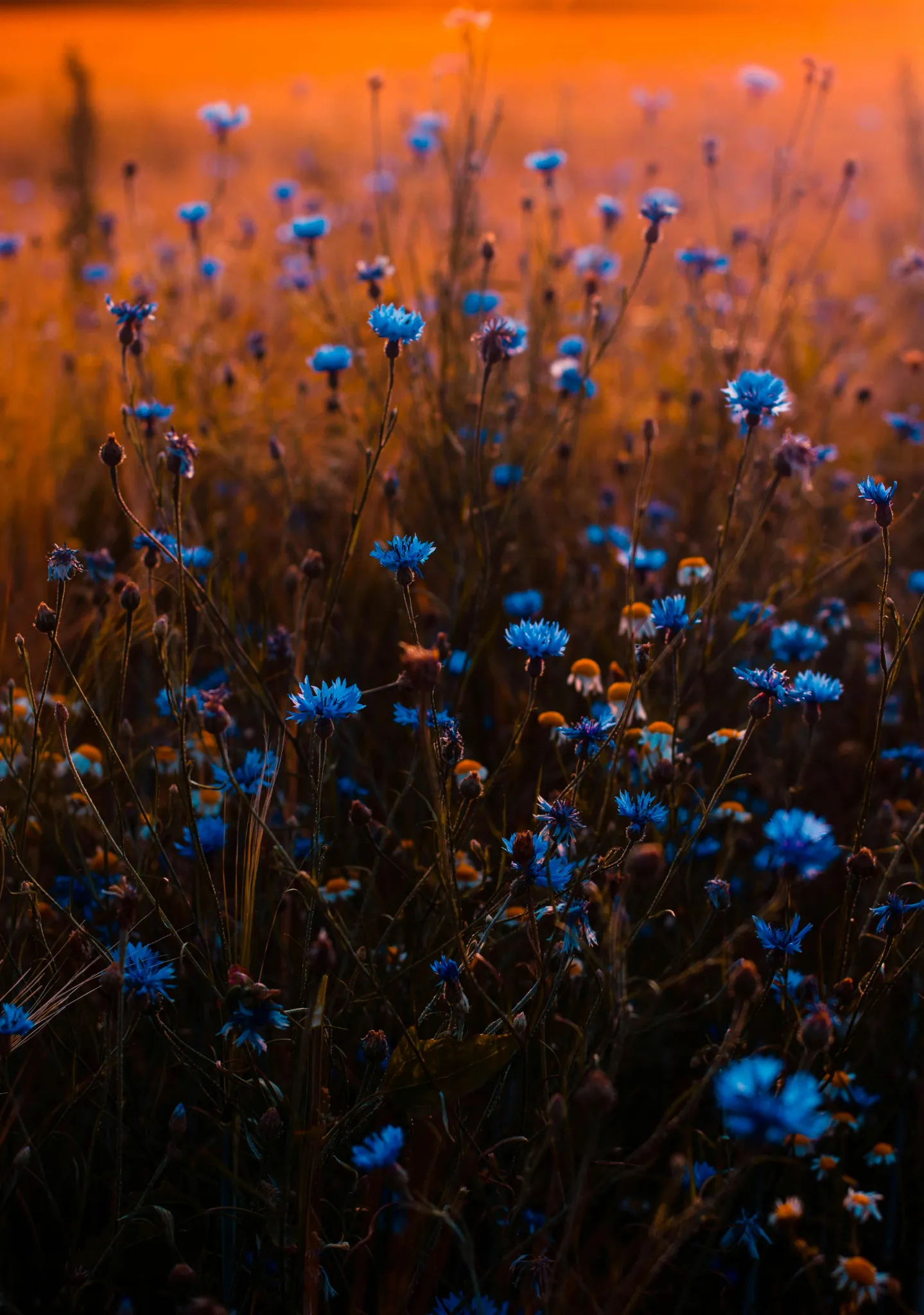
Common chicory looks like a daisy but is actually in the sunflower family and is also known as blue sailor. This handsome plant grows wild by roadsides in its native Europe but has become naturalized in North America. There is a large stand of it on the corner of Highway 28 and Country Club in Incline Village, across from the church on the lakeside of the highway. This plant is a perennial that grows in full sun and can get up to 4 feet tall. The flowers close before dusk, reopening in the morning. I haven’t figured out how to harvest seeds but I found some on americanmeadows.com.
The National Audubon Society, whose mission is to conserve and restore natural ecosystems, focusing on birds and other wildlife, publishes many field guides, including its Field Guide to Wildflowers. This compact book offers exquisite photography as well as a good amount of information on featured plants. I also discovered Tahoe Wildflowers, a Falcon Guide, written and photographed by Tahoe’s own Laird R. Blackwell; I found several of my “mystery plants” here.
The spectacular blooms of June and July are beginning to fade, but are still abundant in the higher elevations, along some of Tahoe’s incredible hiking trails. My favorite time to hike is very early in the morning, when the birds are still singing and the air is crisp, which is also a good time for photographing the specimens you find along your way.
Of course, with the advancements of the smart phone, identifying flower species has become much easier. Two indispensable apps are: iNaturalist and MerlinBirdID.
Toree Warfield is an avid nature lover, and writes this column to teach and stimulate interest in the marvels that surround us.
http://www.arkive.org/pennyroyal/mentha-pulegium/
http://www.britannica.com/EBchecked/topic/450219/pennyroyal
http://www.britannica.com/EBchecked/topic/375426/Mentha#ref158556
http://www.britannica.com/EBchecked/topic/384596/mint#ref291609
http://botanical.com/botanical/mgmh/p/pennyr23.html
http://www.motherearthnews.com/natural-health/pennyroyal-safety.aspx#axzz2e4J8K9lX
http://en.wikipedia.org/wiki/Chicory
http://www.illinoiswildflowers.info/weeds/plants/chicory.htm
http://2bnthewild.com/plants/H190.htm
http://en.wikipedia.org/wiki/Asclepias_cordifolia
http://plants.usda.gov/core/profile?symbol=aspu2
http://en.wikipedia.org/wiki/Ceanothus_prostratus
http://www.nwplants.com/business/catalog/cea_pro.html
http://science.halleyhosting.com/nature/gorge/5petal/buckthorn/prostratus.htm